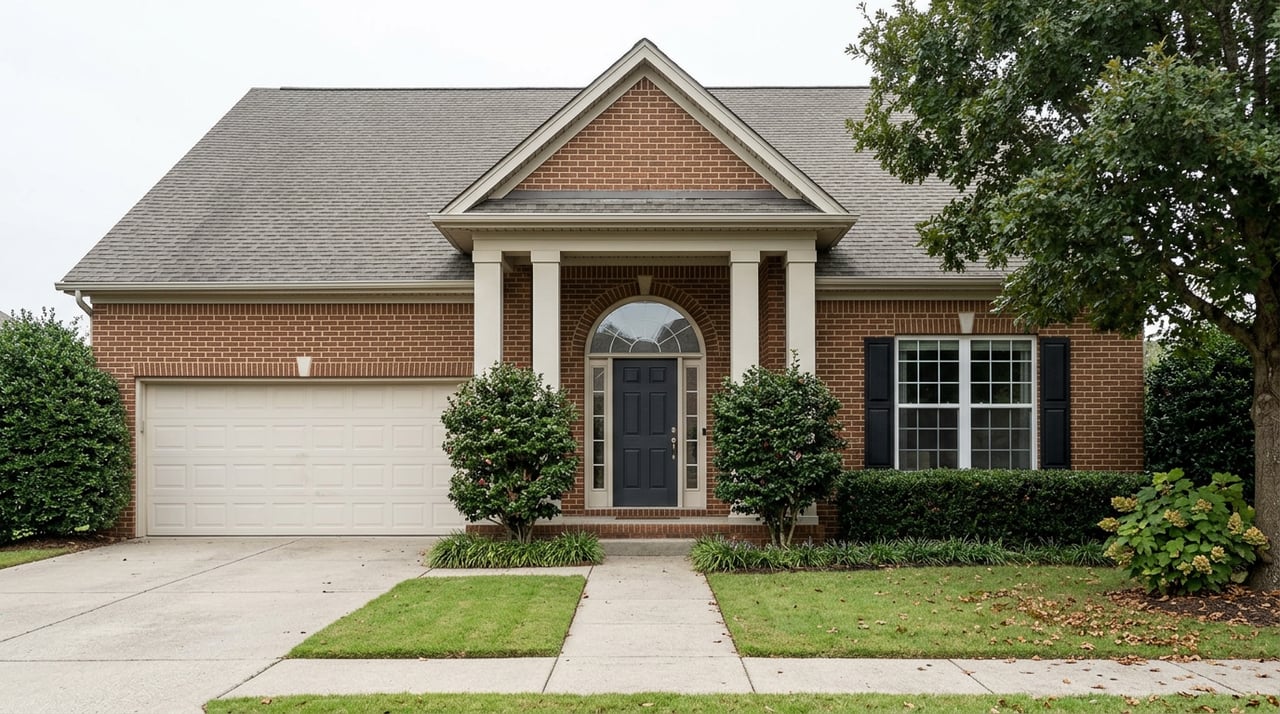
The tax number on a Marietta listing sheet tells you what the current owner pays. It does not tell you what you will pay. In Cobb County, those two figures can be wildly different for the exact same house, and the gap has nothing to do with the price you negotiate. It comes down to a single date: the day someone filed for a homestead exemption, and how long ago that was.
Most buyers assume a property tax bill travels with the house, roughly steady from owner to owner unless the county raises rates. In Marietta, that assumption is wrong in a specific, knowable way, and understanding why matters more this year than it has in a while.
In 2024, Georgia passed House Bill 581, the Save Our Homes Act, promising homeowners statewide a floating homestead exemption that would cap how fast a homesteaded property's taxable value could climb, tied to inflation. Voters approved the enabling amendment that November. If you've heard about it, you probably assumed it protects you as a Marietta buyer too.
It doesn't. Cobb County formally opted out of HB 581 in February 2025, and so did the City of Marietta, Marietta City Schools, and the Cobb County School District, each holding its own public hearings before voting to decline the statewide cap. Every layer of government that touches a Marietta tax bill chose to sit this one out. County Commissioner Monique Sheffield explained the reasoning plainly at the time, calling Cobb's own existing exemption "far more beneficial than what is offered to residents in HB581." Local officials didn't reject protection for homeowners. They rejected trading a better local benefit for a newer, less generous statewide one.
That local benefit is Cobb's own floating homestead exemption, and it works nothing like the state's version.
Cobb's exemption freezes the county portion of your taxable value at whatever level was set the year you first filed for homestead. It applies only to the county general fund line on your bill, not the school portion, not city taxes if you're inside a municipality. Once it kicks in, your county taxable value stops climbing with the market, even as your neighbors' assessed values keep rising around you.
Here's the part that catches new buyers off guard: that freeze has no memory of the house. It resets to the current year's full assessed value the day a new homestead filing is recorded. A longtime owner who filed a decade or two ago might be sitting on a county taxable value that hasn't moved in years, while the identical floor plan two doors down, recently sold and freshly filed, gets taxed on this year's full market assessment. Two comparable houses, two very different county tax lines, and the only variable is when each owner filed.
This is why the seller's current tax bill is close to useless as a predictor of your future one. If they've owned the home a long time, their bill reflects years of frozen value. Yours will not, at least not for a while.
School tax is typically the largest single piece of a Cobb County tax bill, and which school district applies depends on whether a parcel sits inside Marietta's city limits or in unincorporated Cobb. That single geographic fact adds a second layer of variation on top of the freeze. The figures below reflect the most recently adopted millage rates for each taxing authority.
| Taxing layer | Inside Marietta city limits | Unincorporated Cobb |
|---|---|---|
| County general (M&O) | 8.46 mills | 8.46 mills |
| County fire | Not applicable, city fire is funded through city millage | 2.97 mills |
| School district | Marietta City Schools: 17.97 mills | Cobb County Schools: 18.70 mills |
| City/municipal | City of Marietta: 4.817 mills | Not applicable |
Marietta City Schools has held its millage rate at 17.97 for 25 years, with two brief exceptions in 2012 and 2013 when the district built the Marietta Performing Arts Center. Cobb County Schools kept its rate flat at 18.70 mills for the budget year built on the 2026 digest. Neither district raised its rate. Both boards simply let rising assessed values do the work, which is a legal but easy-to-miss distinction: a flat millage rate does not mean a flat tax bill if your assessed value is climbing.
Some downtown and Franklin Gateway-area parcels carry additional overlays, including the Downtown Marietta Development Authority at 1.647 mills and the Gateway Marietta Community Improvement District at 5 mills, so a specific address inside those boundaries will run higher than the baseline city total shown above.
Cobb's chief appraiser, Christine Stinchcomb, told residents in the spring that the county projected roughly 4% growth in the total tax digest for 2026. By the time the county closed the books, growth had come in north of 5%. That's the total value of all taxable property in Cobb, and it rises through a mix of reassessment, new construction, and market activity, independent of whether any single millage rate changes.
For a buyer this means the assessed value on your Notice of Assessment can climb even in years when every taxing authority holds its rate steady, and even if the specific house you're buying hasn't seen a comparable jump in resale value. The mechanism is structural, not personal. It happens because Georgia law requires annual reassessment based on market trends, not because your particular street had a bad year.
There's a second exemption worth knowing before you write an offer, especially if you're buying for yourself later in life or helping a parent relocate. Cobb County residents 62 and older qualify for a full exemption from the county school portion of their tax bill, with no income limit attached. On a $400,000 home, that exemption alone can save roughly $2,990 a year, since school tax is typically more than half the total bill. It's a one-time application, and once granted it renews automatically as long as the homeowner keeps living there.
For a family weighing a move-up purchase where a parent might eventually join the household, or for anyone thinking ahead to their own long-term plans in Marietta, this exemption changes the real math on what a specific address will cost to hold over time.
A few concrete steps make the difference between being surprised and being prepared.
Does the seller's exemption transfer to me? No. Homestead exemptions belong to the person who files them and end when they no longer live in the home as their primary residence. A new owner starts from the current year's assessed value with no freeze in place.
If I'm buying from a longtime owner, will my bill look like theirs? Not in year one, and often not for several years after. Their bill reflects however long their county value has been frozen. Yours starts fresh the year you file.
Can anything be done about a first-year bill that feels high? Yes, through the appeal process tied to your Notice of Assessment, and by making sure you file your own homestead exemption on time so at least the freeze starts working in your favor going forward.
None of this shows up on a listing sheet, and most of it doesn't show up in a portal's estimated monthly payment either. It shows up in October, when the actual bill arrives. If you're comparing homes inside Marietta's city limits against homes in unincorporated Cobb, the millage stack and the exemption timeline are worth understanding before you write an offer, not after.
If you want help thinking through what a specific Marietta address will actually cost to hold, not just to buy, Connie Carlson and the rest of the team are always glad to walk through the numbers with you. Talk to Your Real Estate Family before you sign anything, and let's make sure the bill you expect is the bill you get.