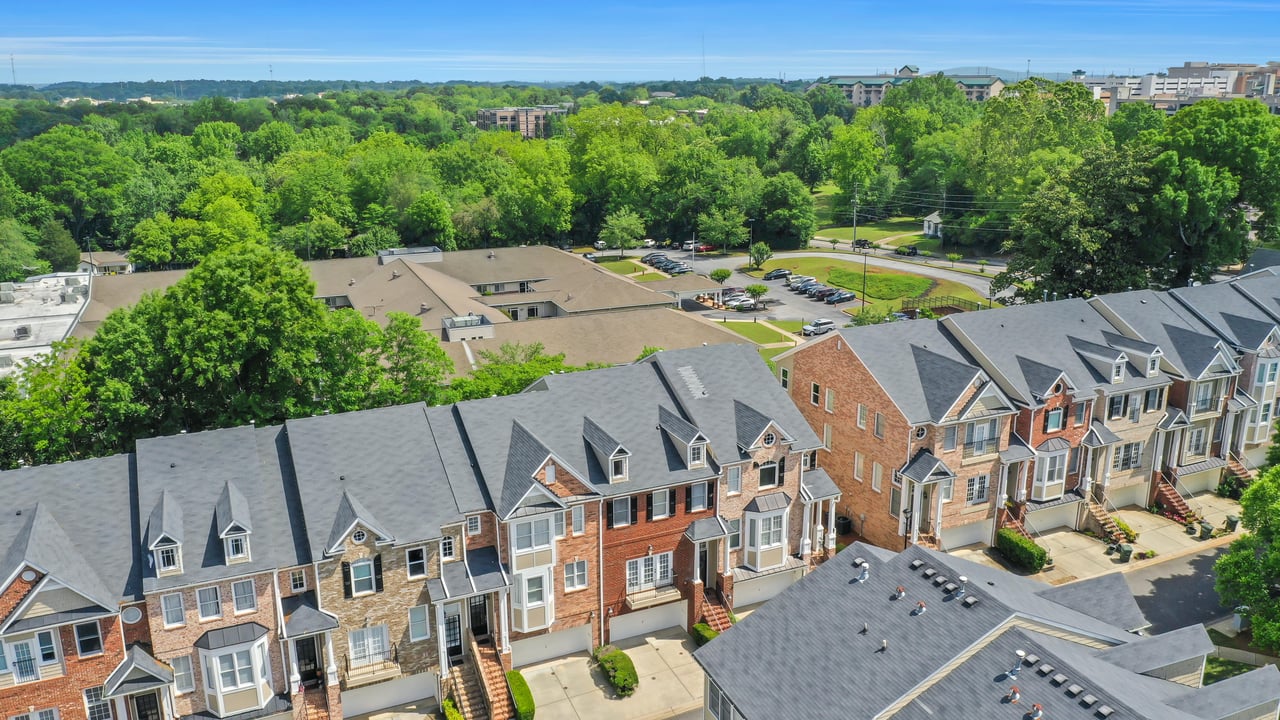
What are the real differences in rental returns between single‑family homes and townhomes in Marietta — and which property type delivers better yields for investors?
In short: Both product types can earn solid rental income in Marietta, but townhomes often offer higher percentage yields thanks to lower purchase prices, while single‑family homes can generate stronger total rent and broader tenant demand.
Before comparing yields, here’s the current context for investors:
The median home price in Marietta is around $441,000–$490,000, with some variation by neighborhood. (Redfin)
Townhomes typically show a lower median price of roughly $430,000 compared with single‑family homes commanding higher median prices. (Homes)
Average rents for rentals across Marietta range depending on unit size, with overall rents around $1,600–$1,800 per month, while three‑bedroom rents can be closer to $1,850–$2,100+. (Apartments.com)
Demand for rentals remains steady with units often moving quickly when priced appropriately. (Inplex.ai)
This mix of moderately priced acquisition costs and solid rent levels sets the stage for investors to evaluate rental yield potential.
Rental yield helps investors compare the income performance of property types:
Gross Rental Yield = (Annual Rent ÷ Purchase Price) × 100
A higher yield suggests better return relative to the property value — especially important when evaluating cash flow potential.
To illustrate current yield dynamics in Marietta, here are realistic examples using local rent and sale price data.
Assumed Purchase Price: ~$480,000 (market median) (Orchard)
Monthly Rent: ~$1,900 (top rental range for 3‑bed units) (Apartments.com)
Annual Rent: $1,900 × 12 = $22,800
Gross Yield: $22,800 ÷ $480,000 × 100 = 4.75%
This yield reflects raw income before expenses and illustrates how larger purchase prices can compress yields even with strong rents.
Assumed Purchase Price: ~$430,000 (typical townhome median) (Homes)
Monthly Rent: ~$1,800 (competitive but slightly lower than detached homes) (Apartments.com)
Annual Rent: $1,800 × 12 = $21,600
Gross Yield: $21,600 ÷ $430,000 × 100 = 5.0%
Townhomes often deliver higher gross yield percentages because of the lower acquisition cost relative to rent — even when rents are modestly lower than single‑family homes.
Because single‑family homes generally cost more than townhomes in the same market, the denominator in the yield equation is larger — often resulting in lower yield percentages.
If a detached property commands significantly higher rent than a townhome, it can offset higher purchase prices — improving net cash flow. In Marietta, larger single‑family units do often rent for more — but not always enough to dramatically shift yields. (Apartments.com)
Townhomes frequently come with HOA fees, which are part of operating costs (and reduce net yield) but can also include exterior maintenance and landscaping. In contrast, single‑family homes typically have no HOA fees but potentially higher upkeep costs.
Pros
Larger rents in many neighborhoods
Broader tenant appeal (families, long‑term renters)
Cons
Higher purchase prices can dampen yield
Full responsibility for maintenance
Pros
Lower purchase cost often drives higher gross yields
Exterior maintenance usually covered by HOA
Cons
HOA dues can reduce net cash flow
Some renters may prefer detached living
| Property Type | Purchase Price | Monthly Rent | Annual Rent | Gross Rental Yield (%) |
|---|---|---|---|---|
| Single-Family Home | $460,000 | $1,900 | $22,800 | 4.96% |
| Single-Family Home | $480,000 | $2,000 | $24,000 | 5.00% |
| Townhome | $400,000 | $1,750 | $21,000 | 5.25% |
| Townhome | $430,000 | $1,800 | $21,600 | 5.02% |
There isn’t a single “right” answer — it depends on your investment goals:
✅ Cash‑flow focused investors — Townhomes often win on percentage yield and entry cost.
✅ Long‑term equity and tenant quality focus — Single‑family homes may deliver higher rents and stable occupancy.
A balanced portfolio including both types can help you diversify risk and tap into different tenant niches.
In Marietta’s current market, townhomes often offer slightly higher gross rental yields thanks to their lower purchase prices, while single‑family homes can deliver stronger overall rental income but with trade‑offs in yield percentage. By understanding both sides of the equation — rent vs. cost — you can make more informed investment decisions tailored to your financial strategy.