Wondering why one Marietta home feels full of porch-centered charm while another feels simple, open, and easy to live in? If you are buying or selling in Marietta, architectural style is more than a label. It can shape your daily routine, maintenance needs, renovation plans, and even how a home fits into the surrounding streetscape. This guide breaks down the home styles you are most likely to see around Marietta and what they can mean for you in real life. Let’s dive in.
In Marietta, architecture is closely tied to neighborhood character. The city has five National Register historic districts, three locally designated residential historic districts, and the Downtown Marietta Historic District. Its preservation approach is designed to protect historic and aesthetic resources while still allowing property owners reasonable flexibility.
That local context matters when you are comparing homes. Marietta’s residential design guidelines describe style as part of a home’s exterior character and emphasize contextual design, design continuity, and property-value protection. In other words, a home’s style can influence both how it looks and how comfortably it fits into the neighborhood around it.
If you spend time near the Marietta Square and older intown areas, you will notice a wide mix of historic house styles. These often include Greek Revival, Queen Anne, Folk Victorian, Italianate, Colonial Revival, and related cottage forms. You can see these styles reflected in areas like Church-Cherokee, Washington Avenue, Atlanta-Frasier, Kennesaw Avenue, and Whitlock Avenue.
These homes often stand out because of their architectural details. Common features include porches, columns, pediments, decorative woodwork, bay windows, and more complex rooflines. In many cases, higher-style homes sit on larger lots with deeper setbacks, while more vernacular homes are placed closer together.
For day-to-day living, historic homes often offer the strongest sense of personality and street presence. They can feel distinctive in a way that newer homes sometimes do not. At the same time, those details can also bring more exterior upkeep, especially when there is more trim, porch work, or original material to maintain.
If you are drawn to a home in one of Marietta’s local historic districts, it is smart to understand the review process early. Exterior changes in those districts are reviewed through a Certificate of Appropriateness. Interior arrangements are generally not reviewed.
That means visible updates may take more planning than changes inside the home. If you are buying, this can affect your renovation timeline and design decisions. If you are selling, it can help to frame your home’s architectural value clearly for buyers who appreciate character and streetscape continuity.
Craftsman and bungalow homes are an important part of Marietta’s architectural mix. The city specifically identifies these styles in its local inventories, and examples appear in Forest Hills, Kennesaw Avenue, and Washington Avenue. They are especially common in intown areas where early 20th-century development still shapes the neighborhood feel.
Many buyers see these homes as a comfortable middle ground. They usually offer more character than simpler mid-century homes, but they often feel less ornate than Queen Anne or Italianate houses. That can make them appealing if you want architectural personality without quite as much visual complexity.
From a lifestyle standpoint, Craftsman and bungalow homes often strike a balance between charm and livability. In Marietta, that balance can matter because the city’s design standards connect good design continuity with neighborhood character and property-value protection. For buyers and sellers alike, these homes often land in a sweet spot between style and practicality.
Ranch homes are a meaningful part of Marietta’s housing story too. The city includes Post WWII Ranch in its in-town style inventory, Forest Hills includes ranch examples, and Georgia’s historic preservation office identifies ranch houses as one of the most common historic house types in the state. The typical ranch form is long, low, and one story.
That layout often translates into easier circulation and fewer stairs. If you are thinking about convenience, long-term usability, or a simpler daily flow, ranch homes can check a lot of boxes. They also tend to feel more straightforward in how rooms connect and how the lot is used.
When buyers compare ranch homes to more decorative historic homes, the decision often comes down to priorities. Ranch homes may compete more on function, lot use, and updates than on ornamental detail. If you are selling a ranch in Marietta, smart presentation and clear positioning can help buyers see the value in that simplicity.
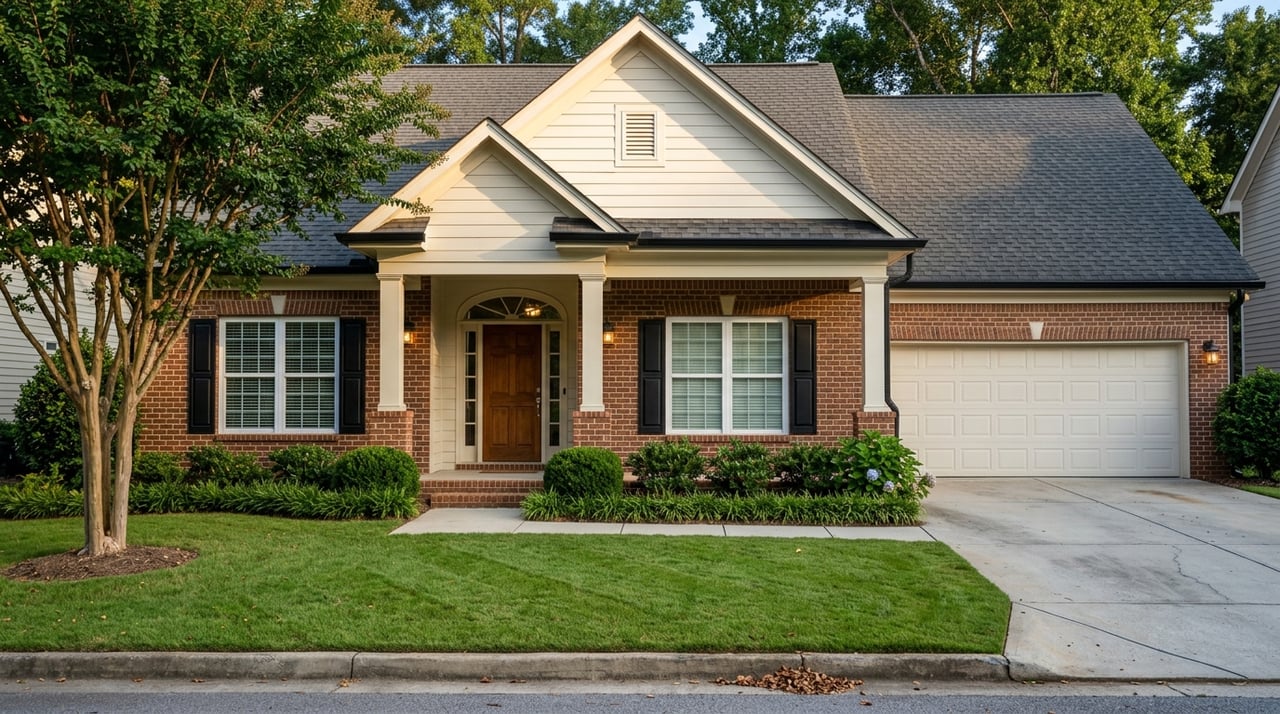
Newer homes in Marietta often read as traditional or Craftsman-influenced rather than sharply modern. That is not by accident. Marietta’s residential design standards do not require one single style, but they do require compatibility with the surrounding neighborhood.
The city’s guidelines call for four-sided architecture, consistent materials on all sides, and design elements that fit their context. New development is also expected to complement the architectural heritage of the district. For buyers, that often means newer homes can offer updated layouts while still feeling connected to the larger neighborhood fabric.
Just north of the historic Square, Church-Cherokee Streets includes about 124 properties and a mix of Georgian cottages and houses, gabled-ell cottages, and Queen Anne houses. This district is a strong example of how roof shape, porch depth, lot spacing, and setback patterns help define the look of historic Marietta.
Just east of the downtown Square, Washington Avenue shows the evolution of local housing across several periods. The district includes homes with Greek Revival, Queen Anne or Victorian, Classical Revival, and Craftsman details. It also shows how older structures can adapt over time, since many intact 19th- and early 20th-century buildings there have been reused as office space.
Less than a mile from the Square in northwest Marietta, Kennesaw Avenue combines high-style homes on one side of the street with more vernacular homes on the other. Reported styles include Greek Revival, Colonial Revival, High Victorian Eclectic, Folk Victorian, and Queen Anne, along with house types such as Georgian houses, bungalows, Queen Anne houses, and gabled-ell cottages.
On Marietta’s west side, Whitlock Avenue offers another layered example. The district includes larger former plantation houses, substantial Victorian town houses, and smaller dwellings on subdivided lots. Architectural classifications listed there include Italianate, Queen Anne, Dutch Colonial, Classic Revival, Bungalow or Craftsman, Greek Revival, and Colonial Revival.
Forest Hills is especially helpful if you want to understand how styles from different eras can exist side by side. Located just a few blocks from the Square, the district includes Queen Anne, bungalow, Georgian, Folk Victorian, Craftsman, Tudor, and ranch homes. It is one of the clearest examples in Marietta of early 20th-century homes and mid-century ranches sharing the same neighborhood fabric.
South of the central business district, Atlanta-Frasier Street shows another broad mix of styles. The district is identified with Greek Revival, Queen Anne, Folk Victorian, Colonial Revival, Bungalow or Craftsman, and Italianate classifications. It reinforces the idea that many of Marietta’s older neighborhoods are shaped by layers of history rather than a single look.
Architectural style often shows up in practical ways after move-in. In Marietta, that can include lot size, setback, porch use, garage placement, roof complexity, and exterior maintenance demands. Two homes at a similar price point may offer very different experiences simply because they were built in different eras and styles.
Historic districts often appeal to buyers who want character, older streetscapes, and walkable blocks. Ranch homes often appeal to buyers who want single-level living and simpler circulation. Newer traditional homes often appeal to buyers who want current floor plans while still fitting the surrounding neighborhood.
If you are thinking ahead to resale, style matters because buyers do not evaluate homes on square footage alone. In Marietta, preservation and design documents explicitly connect architecture to neighborhood character, investor confidence, and property values. That makes style part of the bigger value conversation.
The best fit usually depends on how you balance charm, upkeep, lot function, and renovation flexibility. A Queen Anne or Italianate home may win on presence and detail. A bungalow or Craftsman may offer a strong blend of character and comfort. A ranch may stand out for ease of living, while a newer traditional home may attract buyers who want updated space with neighborhood compatibility.
If you are buying, it helps to look beyond finishes and ask how the style supports the way you want to live. If you are selling, it helps to present your home in a way that highlights the strengths of its design era. That is where local knowledge and a thoughtful marketing plan can make a real difference.
Whether you are comparing a bungalow near the Square, a ranch in an established neighborhood, or a newer traditional home in Marietta or Cobb County, understanding style can help you make a smarter move. When you want local guidance that treats you like family and helps you see both the charm and the strategy behind a home, connect with the Carlson Orange Team.